How Does Low-Basis Farmland Create Big Capital Gains Later?
A farm can be debt-free and still carry a major tax bill. The reason is often low tax basis: the land’s tax cost may be far below what a buyer would pay for it today. When the owner sells, the difference can create a schedule f tax prep large taxable gain—even if the family has held the ground for decades and never thought of it as an investment.
For many farm families, that makes low basis farmland capital gains a more immediate succession concern than federal estate tax. That does not mean every sale is a problem, or that selling is always the wrong choice. It means families should know the basis, understand which tax rules apply, and ask early: Who is likely to sell this asset, and when?
What “basis” means—and why farmland can have so little of it
Tax basis is generally the starting point used to measure gain or loss when property is sold. For purchased land, the basis usually begins with its purchase cost, plus certain acquisition costs and later capital improvements. It is not the same as the land’s current market value, the amount of debt against it, or what the family believes it is worth.
Farmland often rises in value over long holding periods. A farm bought for $100,000 might be worth $700,000 decades later. If the owner sells for $700,000 and has no significant adjustments to basis or selling costs, the gain could approach $600,000. The actual taxable amount depends on the facts, but paying off the mortgage does not erase that gain. Debt and basis are different numbers.
That difference matters when families discuss a “paid-off farm.” Paid off describes the loan. It says nothing about the tax bill that could follow a sale.
How the tax bill is generally calculated
For a straightforward sale, a simplified starting point is:
Amount realized from the sale − adjusted tax basis = gain or loss.
The amount realized is generally the sale price, adjusted for items such as selling expenses. Adjusted basis starts with the original basis and changes over time. For land, improvements that qualify as capital expenditures may add to basis. A deduction already claimed for an item generally cannot also be added to basis.
That calculation is only the beginning. The character of the gain—such as capital gain, Section 1231 gain, or ordinary income—can affect the tax rate and reporting. The property’s use, holding period, depreciation history, prior-year losses, and the seller’s other income can all matter.
Asset or situation Potential tax treatment Why it matters Farmland held for investment or farm use Gain may receive Section 1231 treatment if the requirements are met Net Section 1231 gains may be treated as long-term capital gain, subject to the five-year lookback rule and other limits Depreciable farm equipment Section 1245 depreciation recapture may be ordinary income Prior depreciation can be recaptured up to the applicable amount, even when the equipment has been fully paid for Inherited property Basis is generally adjusted to fair market value at the owner’s death, subject to exceptions A basis adjustment can reduce built-in gain, but it does not automatically eliminate all tax issuesWhy income tax can be a bigger succession threat than estate tax
People often use “estate tax” as shorthand for any tax a family might face after a death or property transfer. That label can send planning in the wrong direction. Estate tax and income tax are separate systems, and a sale of appreciated farmland can create income tax even when no federal estate tax is due.
Federal estate tax generally affects a relatively small share of farm estates because the exclusion is high, though the applicable amount can change and some states impose their own estate or inheritance taxes at different thresholds. A farm estate can still face estate tax, liquidity pressure, or complicated valuation questions, so families should check their own circumstances rather than assume they are exempt.
But for many families, the more likely succession issue is the income tax that arises when heirs sell low-basis land or when an owner sells during retirement. That tax can affect the amount left for the family, the cash available to pay farm debt, and whether the next generation can afford to keep operating.
A useful first step is to separate the questions: Is the estate exposed to estate or inheritance tax? What is each asset’s income-tax basis? Who might sell it, and on what timeline? Those questions call for different calculations and planning tools.
How a basis adjustment at death can change the picture
Property inherited from a decedent generally receives a basis tied to its fair market value at the date of death, or an alternate valuation date if elected and available. That adjustment can reduce the taxable gain if heirs sell the property soon afterward. If the inherited land later appreciates, however, the increase after death may still produce taxable gain on a sale.
This is one reason succession plans should compare a potential lifetime sale with a transfer at death. But “wait until death” is not a universal answer. The owner’s health, cash needs, farm succession goals, state law, ownership structure, charitable plans, and likely future sale all matter. Lifetime gifts often carry the donor’s basis rather than receiving the same basis adjustment, so a gift can transfer a large built-in gain along with the property.
There are exceptions and complications, including certain trusts, jointly owned property, community property rules, installment obligations, and property subject to special valuation or other tax provisions. Have an adviser review the ownership and tax records before anyone signs a deed or gift document.
Depreciation: the other side of the farm’s tax ledger
Land itself is not depreciable. Buildings, drainage or irrigation assets in some cases, and equipment may be depreciable if they meet the applicable rules. Depreciation deductions can reduce taxable farm income over the years, but they also reduce the adjusted basis of the depreciated asset. That lower basis can create more gain when the asset is sold.
Equipment is where the surprise can be especially sharp. Under IRC Section 1245, gain on the sale of qualifying depreciable personal property is generally recaptured as ordinary income up to the applicable depreciation amount. In plain terms, prior depreciation deductions may come back as ordinary income when equipment is sold for more than its adjusted basis. Paying off the equipment loan does not change that result.
For example, suppose a tractor cost $200,000 and the owner claimed $160,000 of depreciation. Its adjusted basis is roughly $40,000 before considering other adjustments. If it sells for $100,000, the $60,000 gain may be ordinary income under Section 1245, subject to the detailed rules and any relevant facts. If the tractor sells for less than its original cost but more than its adjusted basis, recapture can still apply.
Farm buildings and other assets can follow different depreciation and recapture rules. Do not assume that every asset sale produces a capital gain just because the owner held it for years. The depreciation schedule and asset classification matter.
Where Schedule F fits—and where it doesn’t
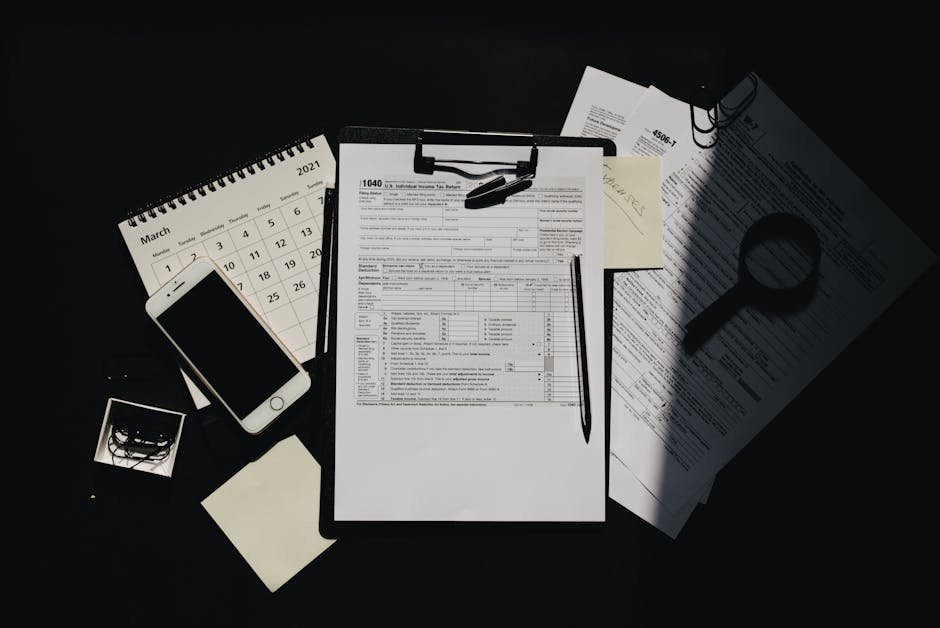
Schedule F reports farm profit or loss for many individual farm operators. It helps document operating income and deductible expenses, but it is not a complete inventory of the family’s basis in land, equipment, and buildings. A Schedule F does not replace depreciation schedules, closing statements, deeds, purchase records, improvement invoices, or prior-year tax returns.
Build an asset file that records, at a minimum:
- Who owns each parcel or asset, including any entity or trust.
- How and when the family acquired it, and the original cost or inherited basis.
- Capital improvements, sales, exchanges, and other basis adjustments.
- Depreciation claimed on equipment, buildings, and other depreciable property.
- Current estimated value and the likely person or entity that may sell it.
Public sources can help families understand trends, but they cannot establish the tax basis of a particular farm. For instance, AGDAILY publishes agricultural coverage, and the USDA Economic Research Service provides research and data on U.S. agriculture and farmland. Use that context to inform questions—not to substitute for deeds, records, or a parcel-specific valuation.
Ways to plan before a sale
There is no single strategy that fits every farm. Start with the likely transaction and compare the tax result under realistic alternatives. A tax professional and an estate-planning attorney can coordinate the income-tax, ownership, and family-governance pieces.

- Get the basis records in order. Reconstruct missing information where possible. Do not rely on an old balance sheet or a remembered purchase price.
- Model the sale before accepting an offer. Estimate gain, depreciation recapture, federal and state income tax, and possible net investment income tax. Include selling expenses and the seller’s broader income picture.
- Compare sale timing and ownership. A sale by an individual, partnership, corporation, or trust can produce different tax and cash-flow results. Changing ownership solely for tax reasons can trigger other consequences.
- Consider whether a valid exchange or installment sale fits. A Section 1031 exchange may defer gain on qualifying investment or business real property if the strict rules are met; it generally does not apply to equipment. An installment sale may spread eligible gain over time, but it does not erase tax and has special rules.
- Coordinate the farm transition. Decide which acres the next generation will operate, which they may rent, and which the family expects to sell. Put the tax analysis beside the family’s operating and retirement plans.
Watch for the “defer it” trap
Deferral can be useful, but it is not the same as tax elimination. A 1031 exchange has strict timing, identification, and qualifying-property requirements. It can defer gain and carry forward basis issues into replacement property. A poorly timed exchange can restrict the family’s options or fail to meet the rules.
Likewise, a sale on contract or installment arrangement can shift the timing of some gain, but it creates credit risk and does not necessarily defer all income. Depreciation recapture can have different timing rules from the remaining gain. Work through the full transaction before relying on a headline summary or a form checklist.
Use a practical learning routine
Families often need to learn enough to ask good questions without turning every meeting into a tax seminar. If an owner prefers listening while driving or doing chores, an audio player such as Instaread can make general business and planning material easier to fit into the day. Treat it as a learning aid, not individualized tax advice. Bring the actual asset list and depreciation schedules to the adviser who can review the family’s records.
Bottom line: identify the likely seller before choosing a strategy
Low basis can turn decades of farmland appreciation into a sizable taxable gain. The same family may also own depreciated equipment that creates ordinary income through IRC Section 1245 recapture. Those risks are easy to miss if the discussion focuses only on estate tax or whether the farm is debt-free.
Start with three questions: What is the adjusted basis of each major asset? Who is likely to sell it, and when? What happens to the tax result if the owner sells now, transfers the asset during life, or leaves it to heirs? Those answers will help the family plan for a possible sell farmland tax bill and manage farmland appreciation taxes without mistaking a tax deferral for a tax cure.
Because federal and state rules change and the details matter, have a qualified tax professional review the records and model the likely transaction before transferring or selling land, equipment, or a farm entity.